Blog

  • Lost for Decades, the Railroad Art of Elizabeth Tone Summers Has Been Found

    Lost for Decades, the Railroad Art of Elizabeth Tone Summers Has Been Found

    For forty years, original artwork by a pioneering female railroad illustrator lay scattered and unrecognized in a museum vault. Now, that work is back in the spotlight, and you can hear the full story of its discovery in an upcoming free online event.

    A Vault Discovery

    The Center for Railroad Photography & Art will host a Zoom presentation on Tuesday, August 11, 2026, at 7:00 pm Central Time (8 pm Eastern, 6 pm Mountain, 5 pm Pacific). The featured speaker is Emily Mizokami, assistant archivist at the California State Railroad Museum Library and Archives.

    Mizokami stumbled upon the lost works of Elizabeth “Betty” Tone Summers while processing collections that had sat untouched for decades in the museum’s vault. The pieces were mixed in with other records, unrecognized for what they were. Her presentation will detail the discovery, the subsequent cataloging effort, and plans to make Summers’ work accessible to the public.

    From Christmas Cards to a 45-Year Career

    Summers, who died in 2021 at age 92, was a graphic artist whose career spanned seven decades. In the 1940s, she aspired to become an architect, but industry limitations for women at the time pushed her toward sketching and painting steam locomotives instead. She taught herself by spending hours in Boston & Albany rail yards, closely studying engines and learning from engineers and firemen.

    Her big break came in 1949 when she met Charles E. Fisher, founder and president of the Railway & Locomotive Historical Society (R&LHS). She was selling locomotive-themed Christmas cards she had silk-screened herself in her attic. Impressed by her accuracy and precision, Fisher contracted her to create cover art for the R&LHS Bulletin (later Railroad History) beginning with issue No. 92 in April 1955.

    She went on to serve as the publication’s art editor and lead artist for 45 years, taking on the role of sole art editor in 1970 and holding it until 1999. For much of that time, she was the only woman creating original cover art for the magazine. She also shared the art editor position with noted railroad engineer and artist Otto Kuhler from 1965 to 1970.

    A Legacy of Steam

    The subject matter of Summers’ art is a key part of its appeal. She captured the final era of steam-powered trains, and both railfans and experts praised her sketches for their remarkable accuracy. Her illustrations also graced the covers of books, magazines, and even a record album.

    One of her paintings is held by the Smithsonian’s National Museum of American History — the cover illustration for John H. White Jr.’s 1981 book The John Bull: 150 Years a Locomotive. Many of her technical drawings and illustrations are now preserved in the R&LHS Graphic Materials collection at the California State Railroad Museum Library and Archives.

    Tune In

    The Center’s presentation will explore Summers’ life, her artistic style, her legacy, and the significance of rediscovering her work. Registration is open now.

    “This program will be recorded and made available on the Center’s YouTube channel at @railphotoart.”

    The talk promises to be a fascinating look at an artist who spent decades chronicling the dying days of steam, only to have her own work nearly lost to time.
  • ATS and Winner Modern Team Up for Licensed Audi R8 LMS GT3 Evo II Replica

    ATS and Winner Modern Team Up for Licensed Audi R8 LMS GT3 Evo II Replica

    ATS and Winner Modern have announced a collaboration to produce a fully licensed diecast replica of the Audi R8 LMS GT3 Evo II. Two versions will be offered: a base model and a luxury variant. Both are described as having a purple exterior finish. Shipments are scheduled for November 2026.

    The Real Racing Machine

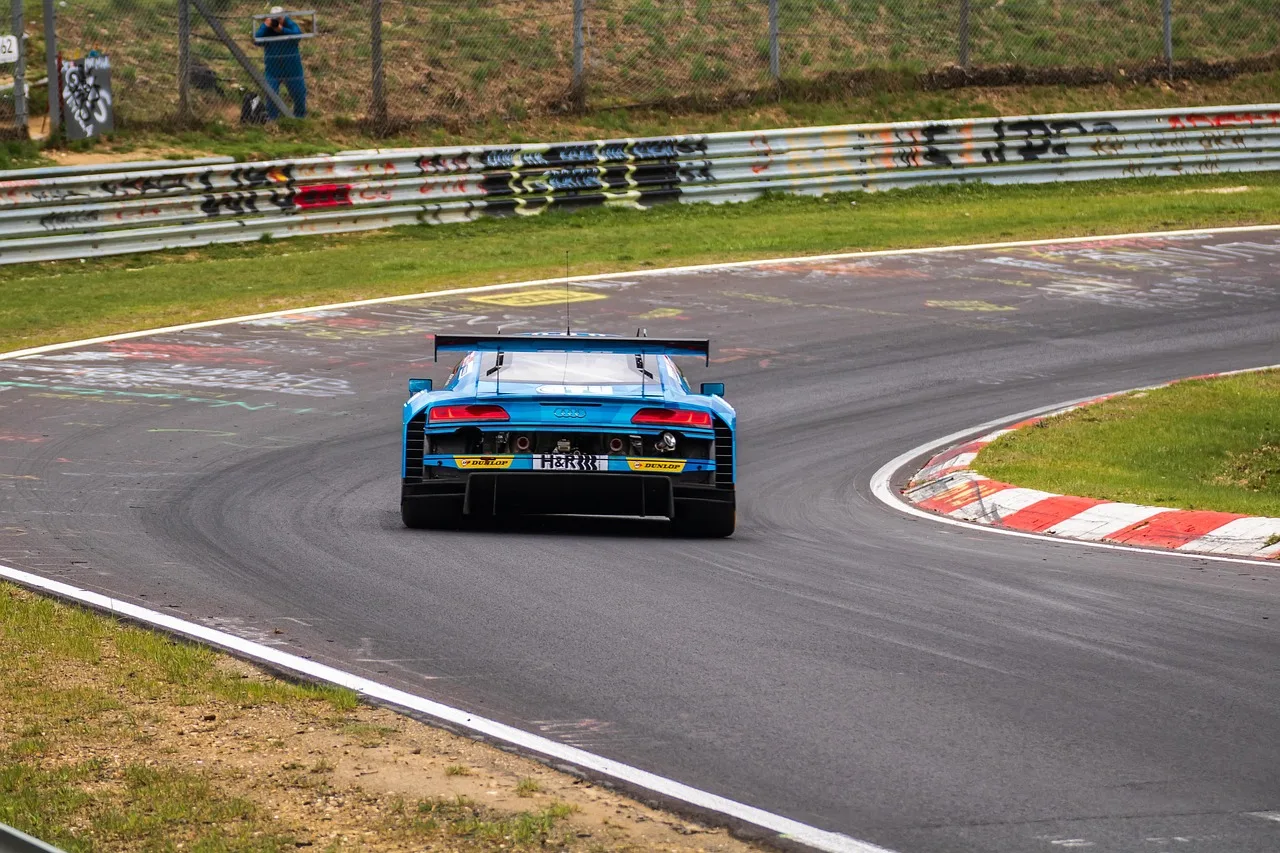
    The Audi R8 LMS GT3 is one of the most successful GT3 race cars ever built. According to Audi MediaCenter, it has claimed 83 drivers’ titles worldwide and 106 additional championship victories. The Evo II, introduced in 2021, is the second evolution of this mid-engine sports car, developed by Audi Sport customer racing to better suit the needs of private customer teams.

    Improvements were made in five areas: aerodynamics, engine characteristics, air conditioning, suspension, and traction control. The most visible change is a new rear wing suspended from behind, shifting downforce generation away from the underbody for improved braking stability. The 5.2-liter V10 gets a new intake system with intake passages extended by 30 millimeters, improving torque in the low and mid-range. The engine can produce up to 585 PS depending on Balance of Performance regulations, as noted by Auto Motor und Sport.

    “The new evolution meets the needs of our customers even more,” said Chris Reinke, Head of Audi Sport customer racing. “The majority of the innovations reflect the wishes that the teams have expressed to us.”

    The real car carries a price of €429,000 (plus VAT), an increase from the previous model’s €398,000. The technology package can be ordered as a complete vehicle or as an upgrade kit for retrofitting existing R8 LMS GT3 cars. Audi Sport customer racing planned to contest the car’s first races still in 2021 to conclude testing, with customer deliveries beginning in the 2022 season. The car was first displayed in the paddock at the 24 Hours of Spa in 2021.

    The Diecast Offering

    Product numbers ATS881101 (base model) and ATS881101+ (luxury version) identify the two variants. Both share an all-purple livery described as “Purple skin.” The announcement did not specify the differences between the two versions. The replica is fully licensed from Audi.

    Background on the Evo II Package

    The Evo II package was developed to maintain the R8 LMS’s competitive edge in GT3 racing, where it competes against as many as ten other brands globally. Audi Sport optimized the car in several areas. Four-way adjustable dampers replaced the earlier two-way units, allowing a wider range of chassis adjustment without mechanical conversions. An air conditioning system was added to improve driver comfort over longer stints, particularly in high temperatures. The traction control system gained new adjustment options, including independent regulation of intervention at the corner apex versus the end of intervention. The engine’s 5.2-liter V10 has a service interval of 10,000 km and a rebuild interval of 20,000 km, according to Audi Magazine Australia.

    Audi Sport customer racing has also achieved eight overall victories in 12-hour races and 13 24-hour race wins with the R8 LMS GT3. The Evo II package was first shown in the paddock at the 24 Hours of Spa in 2021. The package can be retrofitted to current R8 LMS GT3 cars, and all changes are fully backed by the Audi Sport customer racing support networks in each country.

    Availability

    The base and luxury versions of the Audi R8 LMS GT3 Evo II replica from ATS and Winner Modern have been announced with a delivery window of November 2026. Pricing for either version has not yet been disclosed.

  • Modified Tamiya WR-02 Chasis Turns Honda City Turbo Into an RC Drift Car

    Modified Tamiya WR-02 Chasis Turns Honda City Turbo Into an RC Drift Car

    A fresh build highlighted on TamiyaBlog has taken Tamiya’s classic Honda City Turbo RC and adapted it for drifting, giving the wheelie-focused platform a new identity. The modified build uses the WR-02 chassis as its base, leaning into the rear-wheel-drive layout to create controlled slides.

    From Willy’s Wheeler to City Turbo

    The roots of this platform stretch back to 1983, when Tamiya released the “Willy’s Wheeler” (kit 58039). That model featured a wheelie chassis and a cartoonish driver figure, and its body was based on the real Honda City Turbo—a small Japanese tuner car that appeared in 1982. The real Honda City Turbo was often modified with wider wheel arches for racing in Japan, which inspired the Tamiya version.

    In 2015, Tamiya re-released the kit as the Honda City Turbo (kit 58611) at a price of 16,800 Yen, this time using the WR-02C chassis. That chassis was shared with the re-released Wild Willy 2. According to a detailed project page on Technicopedia, apart from being a wheelie chassis, the new platform had “nothing in common with the original”—only the body and tires were carried forward.

    The WR-02 Platform

    The WR-02 is a rear-wheel-drive wheelie chassis equipped with a 540-type torque-tuned brushed motor, simple friction dampers, and a pre-built gearbox. Even when sold as a kit, the gearbox arrives assembled, making it beginner-friendly. The wide stance and large tires give the car stability, allowing it to perform wheelies easily while staying planted. The kit includes a Honda City Turbo body with a comical driver figure and an electronic speed control. To complete the build, hobbyists need a 2+ channel radio system, a standard-size steering servo, and a 7.2V–7.4V battery with a charger, as noted on the Horizon Hobby product page.

    The Drift Conversion

    The modified version featured on TamiyaBlog takes this familiar chassis in a new direction. While the source does not detail the exact modifications, the rear-wheel-drive layout provides a natural foundation for drifting, and the torque-tuned motor delivers the kind of low-end power that suits controlled sliding. The distinctive Honda City Turbo body has been preserved, keeping the retro look intact.

    Reissue and Availability

    Tamiya reissued the Honda City Turbo (kit 58611) on July 19, 2025, at a price of 22,000 Yen. This reissue uses a newly overhauled variant of the WR-02 chassis. The kit is available through retailers such as Horizon Hobby. According to a personal project account on Technicopedia, an Expert Built (RTR) version (kit 57894) was also sold at one point for a little over half the price of the kit. That same account noted that the builder’s own model was destroyed in a 2022 fire and had not been replaced.

    The reissue offers hobbyists a fresh opportunity to build the classic out of the box or modify it for different driving styles—as this recent drift build demonstrates.

  • MINI GT Double-Taps the 007 Line with Thunderball and Living Daylights Icons

    MINI GT Double-Taps the 007 Line with Thunderball and Living Daylights Icons

    MINI GT is expanding its James Bond 007 Collection again, adding two new 1:64 scale die-cast models that draw from different eras of the franchise.

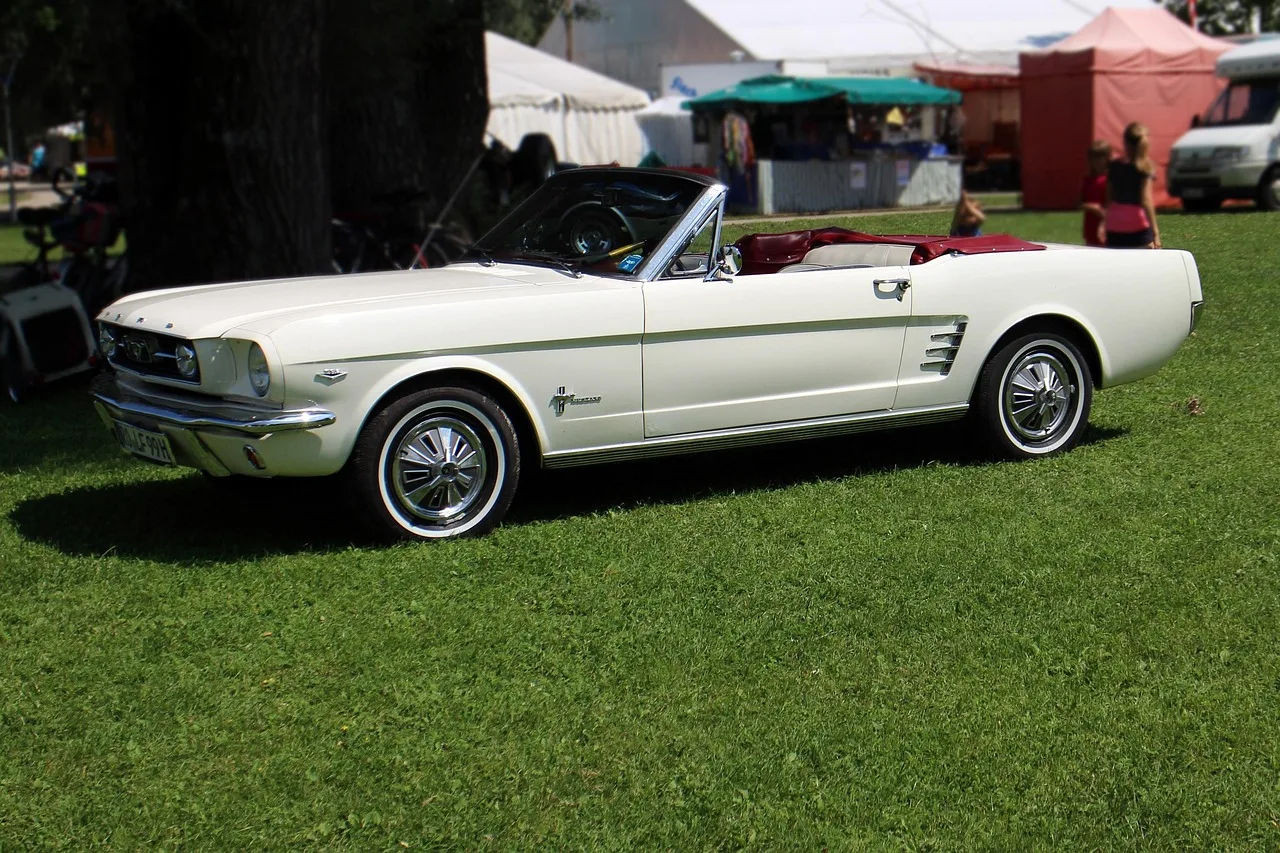
    The new additions are the 1965 Ford Mustang Convertible from “Thunderball” and the Aston Martin V8 Vantage from “The Living Daylights.” Both have been assigned official product numbers: MGT00923 for the Mustang and MGT00922 for the Aston Martin.

    A Growing Lineup of Bond Cars

    The 007 series has been steadily building since its announcement at the Nuremberg Toy Fair in 2024. The line kicked off with the iconic Aston Martin DB5, offered in two versions: one for “Goldfinger” and one for “Thunderball.” Despite the compact 1:64 scale, the DB5 model packs surprising detail. The German publication Modell Fahrzeug reported that the model includes a retractable bulletproof rear shield, extendable battering rams front and rear, and rotating tire slashers on the rear wheels. The DB5 was priced at 15.95 Euro and was initially slated for release in 2025. The Japanese subsidiary Sunrich Japan Corporation later confirmed that the second DB5 variant (Thunderball) was released on February 14, 2025.

    After the DB5, MINI GT added the BMW 750 iL and the Jaguar C-X35, according to Bondesque Magazine. Those were followed by the Ford Mustang Mach I from “Diamonds Are Forever” and the Aston Martin DBS Superleggera from “No Time to Die.” The Mach I model, finished in red with a black bonnet stripe, was offered with a choice of four film posters: British, Japanese, Italian, or Spanish. The DBS Superleggera, the service car of the character Nomi, came with five poster options: British, Japanese, Chinese, traditional Chinese, or Spanish.

    Poster Variants and Packaging

    All models in the 007 Collection are presented in blister packs that include a miniature film poster from the respective movie. Multiple poster variants are available for each car, catering to international collectors. For the DB5, posters were produced in English, French, Spanish, and Japanese. The newer models have continued this tradition, though MINI GT has not yet confirmed whether the latest two models will include poster variants.

    The Latest Pair

    The Ford Mustang Convertible 1965 from “Thunderball” is a convertible rendition of the classic muscle car, while the Aston Martin V8 Vantage from “The Living Daylights” is a fan-favorite Bond vehicle. The product numbers MGT00923 and MGT00922 are now officially assigned to these models. No release date or pricing has been announced for either model at this time.

    The 007 Collection now spans Bond films from “Goldfinger” to “No Time to Die,” with the two new additions filling gaps in the 1960s and 1980s eras. The product numbers MGT00923 and MGT00922 are now officially assigned to the Ford Mustang Convertible 1965 and the Aston Martin V8 Vantage, respectively.

  • MR Collection and Looksmart Scale Down the Lamborghini Urus SE Performante

    MR Collection and Looksmart Scale Down the Lamborghini Urus SE Performante

    The MR Collection and its sister brand Looksmart are bringing the wildest version of Lamborghini’s super SUV to your shelf. The two model specialists have confirmed they will produce resin, sealed-body replicas of the 2026 Lamborghini Urus SE Performante in multiple scales and colors.

    Two Scales, Three Colors

    MR Collection will handle the larger 1:18 scale model, while Looksmart will produce a 1:43 scale version. Both replicas will be available in the same three exterior finishes: Giallo Crius (yellow), Verde Hydra Matt (matte green), and Viola Mithras (purple). Each variant carries its own product code. For MR Collection, the codes are LAMBO069A, LAMBO069B, and LAMBO069SE. Looksmart’s versions are listed as LS582A, LS582B, and LS582C.

    The Real Urus SE Performante

    For those unfamiliar with the full-size vehicle, the Urus SE Performante is the latest and most extreme plug-in hybrid version of Lamborghini’s SUV. According to MotorTrend‘s first look at the vehicle (which Lamborghini has introduced as a 2027 model year), the car packs a twin-turbo 4.0-liter V8 paired with an electric motor, producing a combined 800 hp and 738 lb-ft of torque. Lamborghini claims the SE Performante will sprint from 0 to 62 mph in just 3.3 seconds and reach a top speed of over 193 mph.

    Weight reduction is a key focus. Lamborghini says the SE Performante weighs roughly 5,450 pounds—about 70 pounds lighter than the standard Urus SE—thanks to extensive use of carbon fiber. The roof, hood, wheel arches, side skirts, and rear diffuser are all made from the material. The company says it has used more exposed carbon fiber on this model than on any previous Urus.

    Aerodynamics have also been pushed. The new front bumper improves the drag coefficient by 3 percent over the Urus SE, while downforce is up 23 percent compared to the SE and 16 percent versus the non-hybrid Urus Performante. Larger air intakes, a NACA duct for brake cooling, and a taller carbon-fiber rear spoiler round out the package. The automaker says brake cooling is now 8 percent more efficient than on the Urus SE.

    The hybrid powertrain includes a 25.9-kWh battery, giving the SE Performante an electric-only range of more than 37 miles at speeds up to 86 mph. The power-to-weight ratio is 6.8 pounds per hp, making it the most powerful production internal combustion SUV in the world, according to MotorTrend.

    Lamborghini’s official release describes the Urus SE Performante as “the high-performance derivative of the plug-in hybrid Super SUV, which sets a new benchmark in its category for performance, driving dynamics, and aerodynamic efficiency.” The suspension system has been retuned to improve handling and responsiveness without sacrificing comfort, and the interior features premium materials, a revised infotainment system, and enhanced connectivity.

    What to Expect from the Models

    Both MR Collection and Looksmart specialize in resin, sealed-body models, meaning no opening parts—but the trade-off is sharp, accurate surfacing and fine detailing. The 1:18 scale version from MR Collection will be a substantial piece, while Looksmart’s 1:43 replica will appeal to collectors who prefer smaller footprints or need to fill out a display case.

    Delivery Timeline

    Estimated delivery for both the 1:18 and 1:43 models is Q4 2026. That gives collectors a few months to decide which color—and which scale—fits best. Given the real car’s striking palette and aggressive stance, these should be popular additions to any Lamborghini or super-SUV display.

  • Fresh Diecast Alert: BM Creations’ 1:64 Honda Civic EG6 Wears ADVAN Racing Colors

    Fresh Diecast Alert: BM Creations’ 1:64 Honda Civic EG6 Wears ADVAN Racing Colors

    A new miniature has arrived for collectors of Japanese performance cars. BM Creations has released a 1:64 scale Honda Civic EG6 finished in the classic ADVAN livery, and the model is available now.

    Model Details

    The diecast carries product number 64B0481, as noted in a July 26, 2026 announcement from Diecast Society. The release is currently ready for purchase through retail channels tied to the source report. The ADVAN livery is a well-known motorsport look that gives the compact hatchback an authentic racing appearance straight out of the package.

    The announcement directs collectors to “connect with the site sponsors” to obtain this model. The product code 64B0481 serves as the specific identifier for this ADVAN-liveried variant within BM Creations’ lineup. No further details about pricing, edition size, or production run quantities were included in the release information.

    Context on the EG6

    The Honda Civic EG6 is the real-world vehicle that inspired this miniature. The EG6 nameplate is widely recognized among JDM and Honda enthusiast communities as a performance-oriented Civic variant from the early 1990s. The ADVAN branding has strong historical ties to Japanese motorsport, often appearing on competition cars through sponsorship or tire branding. This model captures that visual connection in small scale.

    For reference, the actual Honda Civic EG6 remains a popular subject in the Japanese used car export market. One dealer, Japan Car Direct, lists the model as a current offering, with services including a bidding deposit system of ¥100,000 that allows customers to bid on vehicles up to 1 million yen. The company maintains multiple locations in Japan, including a Head Office and branches in Osaka, Chiba (at 2-10-16-2 Tendai, Inage Ku, Chiba-shi), and a Documents Branch in Funabashi-shi, Chiba (at 1-11-12 Oana Minami).

    Diecast Release Details

    The model is produced by BM Creations, a manufacturer known for detailed 1:64 scale offerings. The July 26, 2026 release date places this as a current offering for collectors. The announcement does not specify whether this is a limited edition or an open production run, nor does it provide a suggested retail price. Collectors interested in securing the model are directed to the distribution network mentioned in the original announcement.

    The ADVAN livery choice gives this EG6 a competition-ready appearance right out of the blister pack. For builders assembling a diorama or display case featuring 1990s Japanese performance cars, this release pairs naturally with other period-correct models from various manufacturers. The compact hatchback body style of the EG6 is instantly recognizable among Civic enthusiasts.

    Next Steps for Collectors

    The model is currently available for purchase as of the July 26, 2026 announcement. Collectors should contact the site sponsors listed in the Diecast Society report for ordering information. BM Creations has not released any further timeline details regarding production runs or future availability windows for product 64B0481. The announcement from Diecast Society confirms the model “is available now,” with the product code 64B0481 as the reference for the ADVAN-liveried 1:64 Honda Civic EG6.

  • LEGO Technic Rolls Out Three New Cars for August 2026 — But Are They Worth Building?

    LEGO Technic Rolls Out Three New Cars for August 2026 — But Are They Worth Building?

    LEGO Technic is adding three more cars to its lineup this August, and the builds are sparking a mixed reaction from the community. On August 1, 2026, the LEGO Group will release the 42234 Dodge Viper GTS-R, 42235 Ferrari 488 Pista, and 42236 Custom Garage Ford GT Mustang. While the selection caters to sports car fans, a detailed review from Rambling Brick suggests the models are visually uneven and lack the complexity veteran builders might crave.

    The Trio Arrives

    All three sets are midsized Technic builds, sharing a similar assembly process that differs mainly in exterior shape. The reviewer notes that the build experience is virtually identical across the board, with the appeal resting almost entirely on appearance. Prices and piece counts vary, with the Ford GT standing out as the most expensive and customizable option.

    42234 Dodge Viper GTS-R

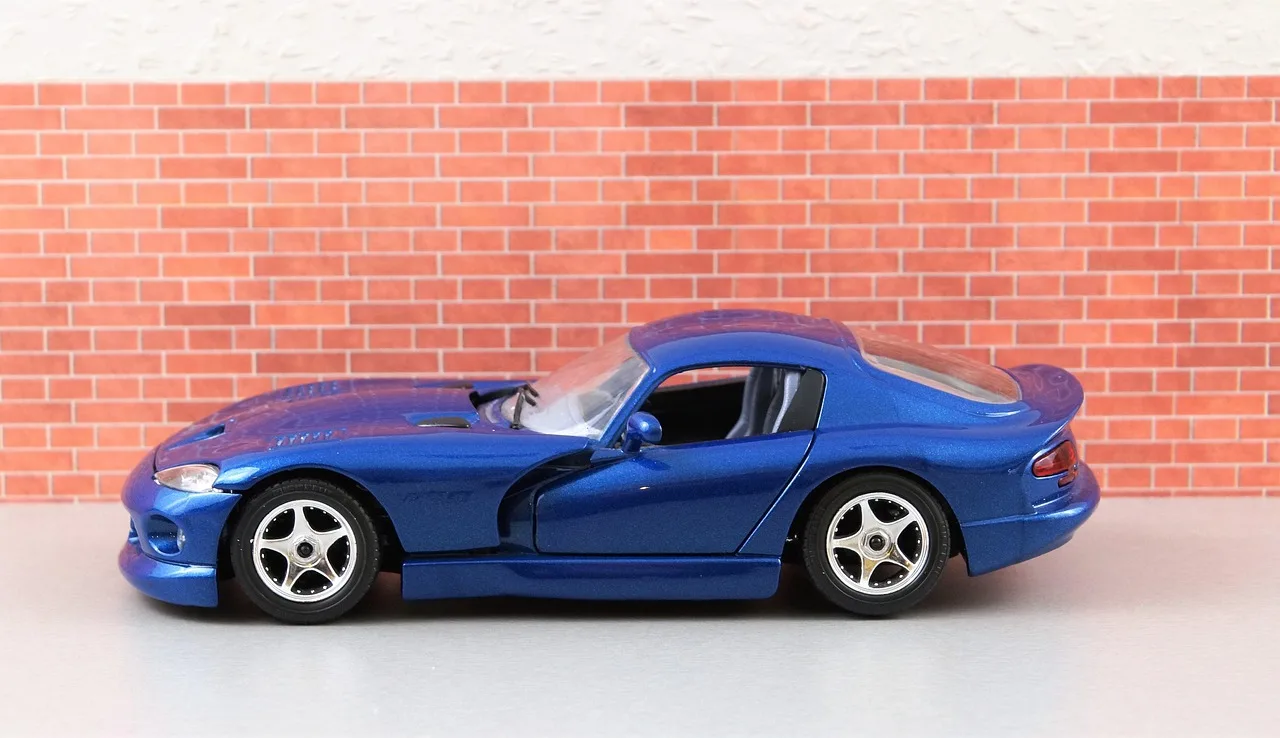
    The Dodge Viper GTS-R comes in white with blue racing stripes. It packs 805 pieces and retails for AU$99.99 / £59.99 / US$64.99 / €64.99. The review describes the model as having gaps throughout, making it look messy — a challenge of capturing the real car’s rounded curves in Technic bricks. The blue stripe is achieved through blue parts near the rear spoilers, but most of the stripe detail relies on stickers. The set includes 26 stickers for a sticker-to-part ratio of 3.2%.

    42235 Ferrari 488 Pista

    The Ferrari 488 Pista fares slightly better, thanks to the real car’s straighter lines. It uses 882 pieces at the same price point as the Dodge. The reviewer notes that the wheel arches and other gaps are still unsightly, and the Technic model doesn’t quite capture the elegance of the original. However, many of the stripes are built with bricks rather than stickers — only 17 stickers are included, giving a 1.9% sticker ratio, which is considered quite nice.

    42236 Custom Garage Ford GT Mustang

    The Custom Garage Ford GT Mustang is the most interesting of the three. With 973 pieces and a price of AU$149.99 / £79.99 / $99.99 / €89.99, it offers a range of customization options. Builders can swap out bumpers, bonnet, spoiler, hubcaps, wheel arches, side trim, and doors. The base car looks somewhat barren — the reviewer compares it to a demolition derby car — but from there you can choose between a purple or yellow variant. The yellow version has presence but excessive spoilers, while the purple works better. The boxier design of the Ford GT means fewer unsightly gaps, making it the most complete-looking model in the lineup.

    One downside: the set comes with a whopping 80 stickers for 973 parts, a 8.2% sticker ratio. That’s one sticker every 12 parts, so patience is required. The Technic driver figure fits into all three cars, but can’t have legs while seated — fine for display, less so for imaginative play.

    The Bigger Picture

    The review also examines the broader trend of Technic cars. Over the past decade, the proportion of car sets has increased, while construction vehicles (excavators, wheel loaders, etc.) have declined in total piece count. The data shows that the number of Technic car sets on the market is clearly higher now than ten years ago, which explains why we’re seeing three new car models in a single review.

    Verdict

    The reviewer gives all three cars 3 out of 5 arbitrary praise units, with a special commendation to the Custom Garage Ford GT Mustang for looking the best — though that’s relative. They note that Speed Champions and Creator Icons offer better-looking cars, but with a more limited selection. If you’re specifically drawn to any of these vehicles, you’ll likely overlook the shortcomings.

    All three sets will be available from August 1, 2026 at LEGO.com and retailers. A Batmobile Technic set review is also expected soon.

  • AKA Drops Two New Reverb Race Tires for 1/8 Buggy and Truggy

    AKA Drops Two New Reverb Race Tires for 1/8 Buggy and Truggy

    AKA has just expanded its off-road tire lineup with the introduction of the Reverb, a new race tire available in both 1/8 buggy and 4.0-inch truggy formats. The release gives competitive RC racers another option to dial in grip and consistency for the coming race season.

    Both tires feature a directional tread pattern and an updated carcass construction, two elements AKA says were engineered to help drivers push harder and stay more consistent through a full race day. The company is positioning the Reverb as a tire that delivers strong forward bite, cornering confidence, and predictable handling.

    Built for Forward Bite and Cornering Confidence

    According to AKA, the directional pattern is designed to efficiently transfer power to the track, producing strong acceleration and braking traction while keeping the car stable and predictable. Strategically positioned tread elements are meant to create predictable steering response, helping drivers hold momentum through technical sections.

    An updated carcass design with optimized inner reinforcements is intended to maintain a consistent contact patch, improving stability and responsiveness under load. AKA says this helps the tire stay controlled from qualifying through the mains.

    Compound Options and Pricing

    AKA lists the 1/8 buggy Reverb in multiple compound choices. The manufacturer’s features list notes availability in Super Soft, Soft Long Wear, and Super Soft Long Wear. The buggy source text also mentions a Soft compound in one section, describing it as delivering a combination of traction, consistency, and wear life for a wide range of temperatures. For the 4.0-inch truggy Reverb, advertised compounds are Super Soft, Soft Long Wear, and Super Soft Long Wear.

    Pricing for the buggy tire varies by configuration. Standard unmounted pairs of two tires are listed at $21.99 for the Super Soft Long Wear (SKU AKA14039QR), the Super Soft (AKA14039VR), and the Soft Long Wear (AKA14039XR) versions. Mounted sets on MTD 17mm white wheels are priced at $31.99 for both the Soft Long Wear (AKA14039XRW) and Super Soft Long Wear (AKA14039QRW) varieties. A Racer Bundle with white wheels in those two compounds runs $79.99 each (AKA14039XRWB and AKA14039QRWB). Each buggy set includes closed-cell foam inserts.

    Wheels and tire glue are required separately for unmounted versions. AKA specifies compatible buggy wheel part numbers as AKA14039XR, AKA14039QR, and AKA14039VR.

    The 4.0-inch truggy Reverb also comes with closed-cell foam inserts in the box and needs separate wheels. Listed compatible wheel part numbers are AKA14139VR, AKA14139XR, and AKA14139QR.

    Race-Day Design Goals

    Both tires were developed with consistency as a focus. AKA states the Reverb provides a planted feel that inspires confidence. The updated carcass is intended to help maintain a controlled contact patch. AKA says this design helps improve stability, responsiveness, and overall control throughout a race.

    For the truggy version, AKA notes its Soft Long Wear compound delivers a versatile combination of traction, predictability, and wear life, designed to provide consistent performance throughout a race day. The Reverb is available now and marks a significant addition to AKA’s off-road racing tire lineup.

  • LEGO’s New 800-Piece Lewis Hamilton Helmet Recreates an F1 Icon in Yellow Bricks

    LEGO’s New 800-Piece Lewis Hamilton Helmet Recreates an F1 Icon in Yellow Bricks

    LEGO has officially thrown its hat into the F1 display-model ring with the release of the 43022 Scuderia Ferrari HP Lewis Hamilton Helmet — an 884-piece brick-built replica of the seven-time world champion’s 2025 race lid.

    The set, which launched on 1 May 2026 for US$89.99 / £79.99 / €89.99, is part of a new LEGO Editions sub-theme focused on collectible helmets. It joins the Scuderia Ferrari HP Charles Leclerc Helmet (43014) as the first two entries in what looks to be a growing lineup of Formula 1 driver helmets.

    A Complex Build Behind a Smooth Curve

    The Hamilton helmet is a dense, display-oriented model that stands roughly 18 cm (7 in) tall. The final result belies a fiendishly complicated interior. According to a review on Jay’s Brick Blog, the build relies on intricate sub-assemblies pointing in every direction, with the reviewer calling it “one of the most complicated interior builds I’ve seen in a set in a while.”

    The set comes in seven numbered paper bags — a nod to Hamilton’s seven world championships — plus a separate bag for a brand-new visor mold.

    New Parts and Printed Details Galore

    LEGO introduced six new molds specifically for this helmet series, several of which appear in the Hamilton set. The visor element is a completely new trans-red piece, while the helmet’s yellow shell uses a fresh large curved slope element and a quarter-circle panel. The yellow colour scheme matches the driver’s personal Modena yellow helmet livery.

    A standout feature: the set is packed with printed parts. The yellow slopes carry printed red lines, the black sponsor logos, and the number 44. The review notes that “the host of printed pieces really helps make this feel like a premium model.” Two sticker sheets are included for the visor — and unusually, duplicate stickers are supplied so builders can reapply if they misalign them.

    The Minifigure: Hamilton Finally Arrives in LEGO Form

    For the first time, this set includes an official Lewis Hamilton minifigure in a Ferrari race suit. The figure wears a red suit printed with team sponsors (HP, Shell, UniCredit) and the driver’s name on the back. His hair is a new braided-coiled-with-bun mold in black.

    A curious omission: the minifigure has no helmet. While the set revolves around a helmet display model, the figure itself comes hatless. The reviewer calls this “such a strange, stark omission.”

    Repetition Warning for Collectors

    If you plan to collect multiple F1 helmets, be warned: the build process is virtually identical across the lineup. Aside from colour differences and a mirrored base construction, the Leclerc and Hamilton helmets share the same internal structure. The review notes that “if you buy more than one of these the build goes from incredibly engaging to super repetitive.”

    The Leclerc set has 886 pieces, while the Hamilton version has 884, a minor difference attributed to tile usage at the rear.

    Pricing and Positioning

    At $89.99, the set sits at a premium price point for a model that fits in the palm of your hand. The review acknowledges it’s “a bit pricey for a final model that is around the size of my hand,” but points to the high part density and extensive printed elements as partial justification.

    The official LEGO announcement ties the set to the brand’s broader multi-year F1 partnership, which also spans Speed Champions and Technic themes. At the 2026 Australian Grand Prix in Melbourne, drivers Charles Leclerc and Lewis Hamilton posed with life-sized brick-built versions of their helmets, each made of over 3,500 LEGO elements and weighing close to 3 kg.

    The 43022 Scuderia Ferrari HP Lewis Hamilton Helmet is available now from LEGO.com and LEGO Stores worldwide.

  • Rally Winner and Road Monster: Tarmac Works Shrinks Two Icons to 1:64

    Rally Winner and Road Monster: Tarmac Works Shrinks Two Icons to 1:64

    Tarmac Works has expanded its 1:64 scale lineup with two sharply contrasting new releases: a Toyota GR Yaris Rally1 HYBRID that took the win at Rally Latvia 2024 and a Mercedes-Benz AMG GT Black Series finished in Grey. The pair gives collectors the chance to add a competition-bred rally champion and a road-focused performance coupe to the same display case.

    The Rally-Bred Yaris

    The Toyota model, product code T64-085-24RL69, represents the car driven by Kalle Rovanperä and co-driver Jonne Halttunen to victory on the Baltic stages. It wears the livery of the Rally Latvia 2024-winning machine.

    The real-world Yaris that inspired the model traces its roots back to 2020, when the GR Yaris first debuted. TOYOTA GAZOO Racing (TGR) has continuously refined it through active motorsport competition, following what the company describes as a “driver-first” philosophy. The evolved GR Yaris made its world premiere at Tokyo Auto Salon 2024. That updated version added a newly developed 8-speed GAZOO Racing Direct Automatic Transmission to the lineup alongside the existing 6-speed manual. TGR also redesigned the cockpit with the help of professional race drivers, tilting the control panel and display 15 degrees toward the driver. Body rigidity was increased with roughly 13% more spot welds and about 24% more structural adhesive.

    Toyota later announced two limited-edition specials supervised by its WRC drivers. The Ogier Edition came in a Matte Stealth Gray finish, while the Rovanperä Edition featured an exclusive three-tone paint design created by a friend of the driver. Each edition was limited to 100 units and offered only through a purchasing lottery system at GR Garage locations across Japan. Applications ran from March 21–31, with winner notifications on April 18. The manufacturer’s suggested retail price for each special edition was 8,450,000 yen. The evolved GR Yaris and both special editions were exhibited at Tokyo Midtown Canopy Square from March 29–31, 2024.

    The Grey Mercedes

    On the other end of the performance spectrum, Tarmac Works has released the Mercedes-Benz AMG GT Black Series under product code T64G-042-GY. The model is finished in a subdued Grey that offers a visual counterpoint to the colorful rally livery of the Toyota. The full-size AMG GT Black Series sits at the top of Mercedes-AMG’s GT coupe range, though Tarmac Works has not released additional specifications for the miniature.

    Numbers and Availability

    Both models are now available from Tarmac Works. Collectors can identify the Toyota GR Yaris Rally1 HYBRID by product number T64-085-24RL69 and the Mercedes-Benz AMG GT Black Series by product number T64G-042-GY. The two releases represent very different automotive worlds—one forged on WRC stages with hybrid power, the other sculpted for road-course performance—both scaled down to pocket-friendly 1:64 size.